[미국] 텍사스 A&M 대, 하수 재이용 정수 필터서 고농도 PFAS 발견
RO 막, 오염물질 제거 효과적이나 필터 내부에 PFAS 지속적으로 누적
여과막 교체 시 작업자 노출 위험 및 부적절한 폐기 시 지하수 오염 가능성
막사용·세척·폐기 문제 앞으로 더 심해질 것…안전한 막처리·폐기 방법 모색해야
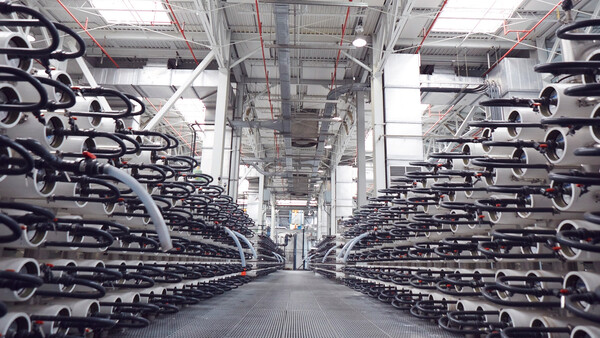
전 세계 도시들이 식수 공급 확대를 위해 고도 정수 시스템을 도입하는 가운데, 미국 텍사스 A&M 대학교(Texas A&M University) 연구진이 중요한 환경 안전 문제를 제기했다. 토목환경공학과의 최신 연구에 따르면, '영원한 화학물질'로 불리는 과불화화합물(PFAS)이 하수를 식수로 재이용하는 고도 처리 과정에서 사용되는 정수 필터에 상당량 축적되는 것으로 나타났다. [사진제공(Photo Source) = Texas A&M University]
전 세계 도시들이 식수 공급 확대를 위해 고도 정수 시스템을 도입하는 가운데, 미국 텍사스 A&M 대학교(Texas A&M University) 연구진이 중요한 환경 안전 문제를 제기했다. 토목환경공학과의 최신 연구에 따르면, '영원한 화학물질'로 불리는 과불화화합물(PFAS)이 하수를 식수로 재이용하는 고도 처리 과정에서 사용되는 정수 필터에 상당량 축적되는 것으로 나타났다.
실제 식수 재이용 시설을 대상으로 진행된 이번 연구는 해당 처리 공정이 오염물질 제거에는 효과적이지만, 필터 내부에 유해 화학물질이 미세하게 포집되는 과정에서 PFAS가 꾸준히 누적된다는 점을 최초로 밝혀냈다.
이러한 결과는 공중 보건과 환경 정책에 중요한 시사점을 제공한다. 상수도 시설에서 수천 개의 마모된 여과막을 교체할 때, 축적된 PFAS가 작업자에게 위험을 줄 수 있으며, 부적절하게 폐기될 경우 지역 지하수로 스며들 가능성도 있다. 연구팀은 PFAS가 정확히 어떻게, 어디에 축적되는지 상세히 분석해 향후 보다 안전한 폐기 절차와 첨단 세척 기술개발에 필요한 기초 데이터를 제공할 수 있다.
샹카르 첼람(Shankar Chellam) 토목환경공학과 교수와 온카르 에칸데(Onkar Ekande) 박사후연구원, 빌랄 아바다(Bilal Abada) 전 박사과정생, 브렌트 알스팍(Brent Alspach) 아르카디스(Arcadis) 응용 연구 책임자가 공동 저자로 참여한 이번 연구는 『멤브레인 사이언스 저널(Journal of Membrane Science)』에 게재됐다.
연구팀은 실제 대규모 식수 재이용 시설에서 4년 연속 가동된 여러 상업용 역삼투(RO) 필터(코일 형태의 판형 고분자 막)를 분석했다. 첼람 교수는 "RO는 염분을 제거하는 데 탁월할 뿐 아니라 FPAS 제거에 매우 뛰어나다"며 “이 기술은 말 그대로 해수 담수화 기술이며, 많은 오염물질을 제거하는 데 효과적이지만 비용이 많이 든다”고 설명했다.
RO 방식은 높은 압력을 이용해 고분자 막으로 물을 통과시켜 염분, 미네랄, 오염물질을 걸러내는 기술이다. 특히, 하수는 호수, 강과 같은 일반 담수보다 PFAS 농도가 훨씬 높아, 필터를 장기간 사용할 경우 강력한 화학오염에 노출된다.
연구진은 장쇄 PFAS 화합물이 단백질, 당류, 미생물로 구성된 점액이나 생물막 같은 유기 및 생물학적 오염층에 강하게 결합한다는 사실을 발견했다. 이러한 층은 시간이 지남에 따라 필터 표면에 자연스럽게 형성된다. 아바다 전 박사과정생은 “생물학적 오염과 PFAS 축적 사이에 상관관계가 있을 수 있다”며 “마지막 여과 단계를 제외한 모든 단계에서 유기물 오염을 발견했다”고 말했다.
또한 긴 사슬 구조의 소수성 PFAS 변종이 여과 초기 단계에서 포집된 화학물질의 3분의 2를 차지했으며, 시간이 지나면서 더 안정적인 형태로 분해되는 전구물질도 14%를 차지했다. 반면, 최종 단계에서는 석회질 무기물 스케일이 주를 이뤄 PFAS가 거의 남지 않았다.
첼람 교수는 "PFAS는 극히 낮은 농도에서도 독성을 띠며, 현재 많은 식수원과 하수에서 검출되고 있다"며 "RO 같은 기술은 PFAS 농도가 낮은 물을 처리하지만, 필터 내부에는 훨씬 높은 농도로 농축된다"고 강조했다.
이번 연구는 널리 우려되는 오염물질에 대한 중요한 데이터를 제공하며, 정책 수립과 규제 감독을 지원한다. 또한 PFAS 저감 기술 연구에도 필터 수명 주기 분석 측면에서 활용될 수 있다. 아바다 전 박사과정생은 "막 사용, 세척, 폐기 문제는 앞으로 더 심각해질 것"이라며 "결국 수명이 다한 막을 안전하게 처리하고 폐기하는 방법을 찾아야 한다"고 말했다.
물부족에 시달리는 지역사회가 첨단 재이용 기술을 확대하는 상황에서, 이번 연구는 PFAS 축적이 필터 수명 주기에 미치는 영향을 이해하고 기술을 보다 안전하게 활용하는 데 중요한 기초를 제공한다.
[원문보기]
High levels of forever chemicals found on wastewater filters
A significant buildup of “forever chemical” concentrations on reverse osmosis filters used in desalination and advanced wastewater treatment highlights the need for proper handling, disposal and recycling.
As cities across the nation and the globe increasingly turn to advanced water purification systems to expand their drinking water supplies, researchers at Texas A&M University have identified a critical environmental safety consideration.
A new study from the Zachry Department of Civil and Environmental Engineering shows that per- and polyfluoroalkyl substances (PFAS), commonly known as “forever chemicals,” accumulate significantly on the purification filters used in advanced treatment to recycle wastewater into drinking water.
This breakthrough research examines a real-world potable reuse facility, where municipal wastewater is currently treated to very high standards to produce safe drinking water. Although the technology effectively removes contaminants, the study shows for the first time that microscopic trapping of harmful chemicals causes significant accumulation on the filters over their operational lifespan.
These findings carry implications for public health and environmental policy. When water utilities replace thousands of worn-out filtration membranes, the accumulated PFAS could pose risks to workers handling the equipment or leach into local groundwater if the components are discarded improperly.
By detailing exactly how and where these persistent chemicals accumulate, the research provides engineers with the foundational data needed to develop safer disposal protocols and advanced cleaning techniques.
Civil and environmental engineering professor Dr. Shankar Chellam, his post-doctoral fellow Dr. Onkar Ekande, his former Ph.D. student Dr. Bilal Abada, and Brent Alspach, director of applied research at Arcadis, were co-authors of the study, published in the Journal of Membrane Science.
The research team analyzed several commercial reverse osmosis filters — coiled, sheet-like polymer membranes — that had been operating for four consecutive years at a full-scale potable reuse facility.
“Reverse osmosis is excellent at removing PFAS, just like it’s excellent at removing salts,” said Chellam. “It’s literally a desalination technology, and it is good for removing a lot of contaminants, but it’s expensive.”
Reverse osmosis works by forcing water through a dense, highly selective polymer membrane under high pressure, leaving salts, minerals and contaminants behind. Because wastewater contains much higher levels of PFAS than typical freshwater sources like lakes or rivers, these filters face an intense barrage of chemical pollutants over years of continuous service in a potable reuse plant.
This research addresses a crucial gap by analyzing the concentrations of these chemicals on the filters themselves. The team discovered that long-chain PFAS compounds often bind strongly to organic and biological fouling layers — slimes or biofilms composed of proteins, sugars and microorganisms — that naturally form on filter surfaces over time.
“There could be a correlation between the bio-organic fouling and PFAS accumulation on the filter surfaces,” said Abada. “In all but the very last filtration stage, we found organic fouling.”
The researchers discovered that long-chain, water-repelling PFAS variants accounted for two-thirds of the trapped chemical mass in the initial stages of membranes. Additionally, chemical precursors — compounds that degrade over time into more stable forms of PFAS — accounted for another 14% of the accumulation. In contrast, the final stage of the filtration system, which was dominated by chalky mineral scales rather than organic slime, retained almost no PFAS.
“PFAS is toxic at very low concentrations, and they have been reported in numerous drinking water sources and wastewater,” said Chellam. “The removal technologies currently in use, such as reverse osmosis, take a water stream that is relatively dilute in PFAS and concentrate the toxic chemicals to much higher levels on the filters.”
The conclusions drawn from this study add critical data on a widely concerning pollutant and support policymaking and regulatory oversight. Future research on PFAS mitigation technologies can also benefit from these results in terms of membrane life cycle analysis.
“The problem of membrane use, cleaning and disposal will only become bigger and bigger,” said Abada. “Even if we become more efficient and make the membranes last longer, we still have to figure out how to safely handle and dispose of them once they reach their end of life.”
As water-stressed communities continue to adopt advanced recycling technologies, these insights help ensure they can do so with a better understanding of the impact of PFAS accumulation on membrane lifecycles.
[출처 = 미국 텍사스 A&M 대학교(Texas A&M University)(https://news.engineering.tamu.edu/news/2026/07/06/high-levels-of-forever-chemicals-found-on-wastewater-filters/) / 2026년 7월 6일]
 즐겨찾기 추가
 시작페이지로 설정



























