[아일랜드] 트리니티 칼리지 더블린 연구진, 물 접촉 과정서 미세·나노플라스틱 생성 메커니즘 규명
트리니티 칼리지 더블린·중국·미국 대학 공동연구, 『Science Advances』 게재
미세기포 유도 침식 통해 미세·나노플라스틱 방출 확인
병입수 통해 연간 최대 9만 개 섭취 추정, 심혈관·신경퇴행성 질환 연관성 제시
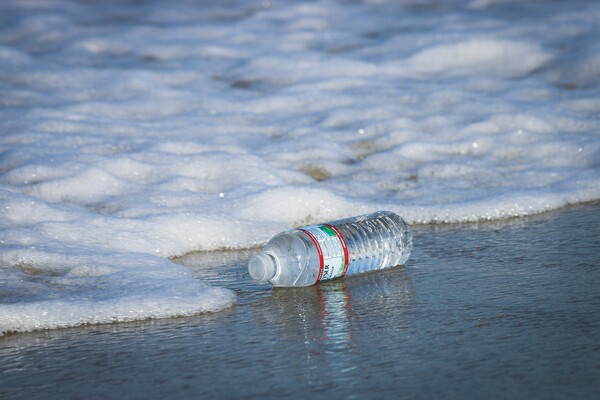
아일랜드 트리니티 칼리지 더블린 (Trinity College Dublin) 연구진이 이끄는 국제 공동연구팀이 플라스틱이 물과 접촉하는 과정에서 발생하는 미세기포 유도 침식이 미세·나노플라스틱을 생성·방출하는 핵심 메커니즘임을 규명했다. [사진제공(Photo Source) = Unsplash]
아일랜드 트리니티 칼리지 더블린 (Trinity College Dublin) 연구진이 이끄는 국제 공동연구팀이 플라스틱이 물과 접촉하는 과정에서 발생하는 미세기포 유도 침식이 미세·나노플라스틱을 생성·방출하는 핵심 메커니즘임을 규명했다. 이번 연구는 수중 환경 요인이 미세·나노플라스틱 생성에 미치는 영향을 제시하며, 인체 건강과의 연관성 논의에 기초 자료를 제공한다.
트리니티 칼리지 더블린의 앰버 리서치 아일랜드 센터(AMBER Research Ireland Centre) 연구진이 주도한 연구에 따르면, 플라스틱 표면에 형성되는 미세 기포로 인한 침식 과정에서 미세·나노플라스틱이 물속으로 방출되는 것으로 확인됐다.
연구진은 지금까지 심혈관 및 신경퇴행성 질환과 점차 연관성이 제기돼 온 미세·나노플라스틱이 수중 환경에서 어떻게 생성되는지에 대한 이해가 제한적이었다고 밝혔다.
미세·나노플라스틱은 육안으로 식별하기 어려운 전 세계적 신흥 오염물질로, 수중 환경 전반에 광범위하게 존재한다. 이러한 오염으로 인해 미세·나노플라스틱은 전 세계 식품 사슬로 유입되고 있으며, 개인은 병입수 섭취만으로도 연간 최대 9만 개의 미세·나노플라스틱를 섭취하는 것으로 추정된다.
연구진은 미세·나노플라스틱이 경동맥 플라크에 축적될 경우 사망 또는 주요 심혈관 사건 위험 증가와 연관돼 있으며, 뇌 조직 내 축적은 신경퇴행성 질환과 상관관계를 보인다고 설명했다.
연구팀은 효과적인 저감 전략 수립을 위해서는 미세·나노플라스틱의 생성 및 방출 메커니즘에 대한 이해가 필수적이라고 강조했다. 기존 연구는 주로 기계적 마모나 자외선 노출 등 요인으로 인해 수중 환경에서 대형 플라스틱으로부터 미세·나노플라스틱이 방출되는 현상에 초점을 맞춰왔다.
그러나 플라스틱과 물이 밀접하게 접촉하는 환경임에도 불구하고, 공기 기포, pH, 염분 농도와 같은 수중 요인이 미세·나노플라스틱 생성에 미치는 영향에 대해서는 근본적인 이해가 부족한 상황이었다.
연구 결과에 대해 존 볼런드(John Boland) 앰버 리서치 아일랜드 센터 연구원이자 트리니티 칼리지 더블린 화학과 교수이며 논문 교신저자는 “플라스틱 분해는 환경과 인류 건강에 대한 보이지 않는 위협"이며 "환경에서 플라스틱 폐기물을 제거하는 것은 중요한 첫 단계이지만, 그것만으로는 충분하지 않다”고 말했다.
“우리 연구는 플라스틱이 물과 접촉할 때마다 플라스틱 표면에 형성되는 공기 기포가 침식을 일으키고, 보이지 않는 미세·나노플라스틱을 방출한다는 사실을 보여준다. 이는 피할 수 없는 현상이다. 물에 용해된 공기는 플라스틱이 해안선에 있든 병이나 용기 내부 표면에 있든 상관없이 자연스럽게 플라스틱에 끌린다. 사회는 우리가 보편적으로 사용하는 플라스틱이 초래하는 문제의 규모를 시급히 직시해야 한다”고 밝혔다.
이번 연구는 트리니티 칼리지 더블린, 중산대학(Sun Yat-Sen University), 허하이대학(Hohai University), 저장농림대학(Zhejiang A&F University), 캘리포니아공과대학교(California Institute of Technology) 연구진이 참여했으며, 국제 학술지 『Science Advances』에 게재됐다.
연구진은 이번 연구가 대부분의 플라스틱 제품 원료인 플라스틱 펠릿(plastic pellets)에서 발생하는 미세·나노플라스틱 오염을 규제하기 위해 2025년 12월부터 시행된 유럽연합(EU)의 새로운 규정과 맞물려 정책적 시의성이 크다고 설명했다.
EU는 지속가능한 경제로의 전환을 위한 입법을 추진하고 있으며, 이번 연구와 같이 미세·나노플라스틱이 정확히 어떻게 생성되는지를 규명하는 추가 연구는 근거 기반 정책 수립에 기여할 것으로 전망된다.
[원문보기]
Water erosion contributes to generation of micro and nanoplastics linked to cardiovascular and neurodegenerative diseases
A team of scientists, led by researchers from the AMBER Research Ireland Centre in Trinity, has determined that microbubble-induced erosion releases micro and nanoplastics (MNPs) into water.
Until now there had been limited understanding of how aquatic factors contributed to the generation of MNPs, which are increasingly linked to cardiovascular and neurodegenerative diseases.
MNPs are globally emerging pollutants that are frequently invisible to the naked eye. The pervasive contamination of MNPs in aquatic environments has enabled their penetration into global food chains, with individuals now estimated to ingest up to 90,000 MNPs annually from bottled water alone.
Accumulation of MNPs in carotid plaque is associated with increased risk of death or major cardiovascular events, while there are correlations between accumulation in brain tissue and neurodegenerative diseases.
Understanding the mechanisms of MNP generation and release is critical to developing effective mitigation strategies. To date, most studies have focused on MNP release from bulk plastics in water environments due to factors such as mechanical wear and UV exposure.
Despite the intimate contact between plastics and water in these environments, there is no fundamental understanding of how aquatic factors such as air bubbles, pH and salt levels influence the generation of MNPs.
Speaking about the results, John Boland, Researcher in AMBER, Professor in the School of Chemistry at Trinity and lead author, said: “Plastic degradation is an invisible threat to the environment and human health. Removing plastic waste from the environment is an important first step, but it is not enough.”
“Our research shows that whenever plastic comes into contact with water, air bubbles that form on plastic surfaces cause erosion and the release of invisible MNPs. This is unavoidable. Air dissolved in water is naturally attracted to plastics, regardless of whether the plastic is along a shoreline or the inner surface of a bottle or container. Society urgently needs to come to grips with the enormity of the challenge posed by our ubiquitous use of plastics.”
The study, led by Prof. Boland and colleagues from Trinity, Sun Yat-Sen University, Hohai University, Zhejiang A&F University and California Institute of Technology, was recently published in leading international journal Science Advances.
The study is particularly timely given the implementation last month (December 2025) of new EU rules that will tackle MNP pollution generated from plastic pellets, the raw material for most plastic products. The EU’s implementation of legislation to progress Europe’s transition to a sustainable economy will benefit from this and further studies which determine exactly how these MNPs are being generated, allowing for evidence based policy.
[출처 = 트리니티 칼리지 더블린(Trinity College Dublin)(https://www.tcd.ie/news_events/top-stories/featured/water-erosion-nanoplastics/) / 2026년 1월 16일]
[연구논문 출처 = 『사이언스 어드밴스(Science Advances)』(https://www.science.org/doi/10.1126/sciadv.aea4729) / 2025년 12월 17일]
 즐겨찾기 추가
 시작페이지로 설정



























